
Cheryl’s News & Views : Local Law 97 Is Your Building Ready? What It Means for Your Property and Your Wallet
What Every Property Owner and Buyer Should Know About Local Law 97
The New York City real estate market continues to generate plenty of headlines, but I’ve always believed that how the market is performing depends on whom you ask. For landlords, strong rental demand and high rents have created opportunities. For tenants, finding an affordable apartment remains challenging. All-cash buyers often have greater negotiating power, while sellers may face a more competitive environment, particularly if they purchased at the height of the market.
There is no single New York City real estate market. Every transaction tells a different story. Regardless of market conditions, I believe that being informed is one of the greatest advantages you can have as a property owner or prospective buyer. That brings me to an important topic that deserves more attention: New York City’s Local Law 97.
What Is Local Law 97?
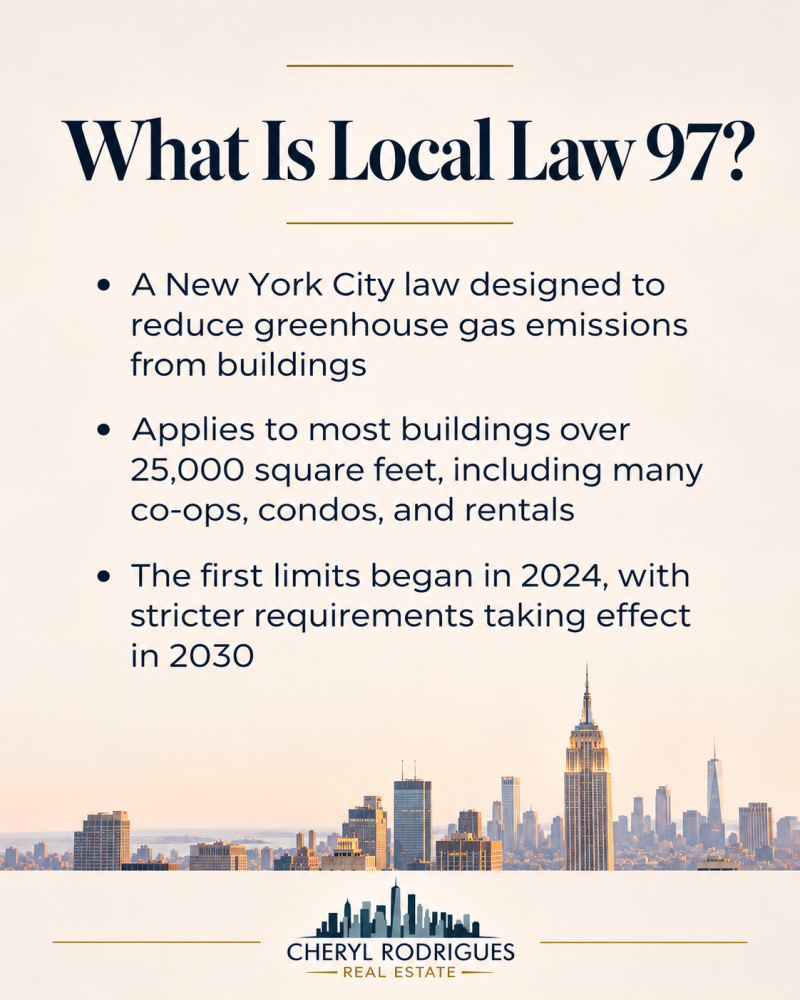
- ✅ Reducing Emissions: Local Law 97 is part of New York City’s effort to reduce greenhouse gas emissions from buildings.
- ✅ Which Buildings Are Affected? The law applies to most buildings larger than 25,000 square feet, including many residential co-ops, condominiums, rental buildings, and commercial properties.
- ✅ Improving Energy Efficiency: The goal is to make buildings more energy-efficient by reducing emissions associated with heating, cooling, electricity, and other building operations.
- ✅ Key Deadlines: The first emissions limits took effect in 2024, with stricter requirements beginning in 2030.
- ✅ Why Does This Matter to You? Complying with Local Law 97 could involve significant building improvements, and those costs may ultimately affect apartment owners and property values.
What Happens if a Building Does Not Comply?
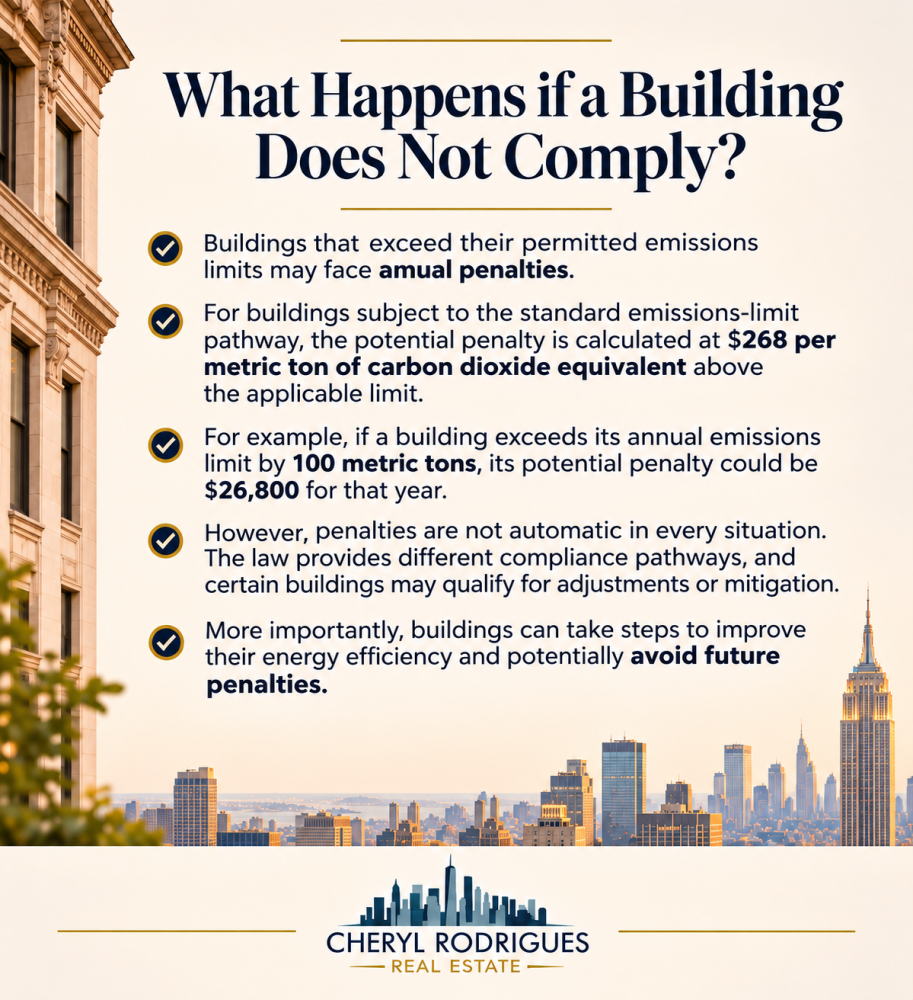
Buildings that exceed their permitted emissions limits may face annual penalties. For buildings subject to the standard emissions-limit pathway, the potential penalty is calculated at $268 per metric ton of carbon dioxide equivalent above the applicable limit.
For example, if a building exceeds its annual emissions limit by 100 metric tons, its potential penalty could be $26,800 for that year.
However, penalties are not automatic in every situation. The law provides different compliance pathways, and certain buildings may qualify for adjustments or mitigation. More importantly, buildings can take steps to improve their energy efficiency and potentially avoid future penalties.

Could Local Law 97 Lead to Higher Maintenance or Common Charges?
This is probably the most important question for co-op and condo owners. Some buildings may need to upgrade their heating and cooling systems, improve insulation, replace inefficient equipment, or undertake other energy-saving improvements.
Depending on the building’s financial position, these projects could be funded through existing reserves, financing, increased maintenance or common charges, or special assessments.
But not every building will face large expenses. Some are already operating within the required limits, while others have been proactively investing in energy-efficient improvements. The key is to understand where your building stands today and how well it is preparing for 2030.
Thinking of Buying a Co-op or Condo? Ask These Questions.
If you’re considering purchasing an apartment, I always recommend looking beyond the purchase price, maintenance, and common charges. Local Law 97 adds another important consideration when evaluating a building’s long-term financial health.
Here are five questions worth asking during your due diligence:
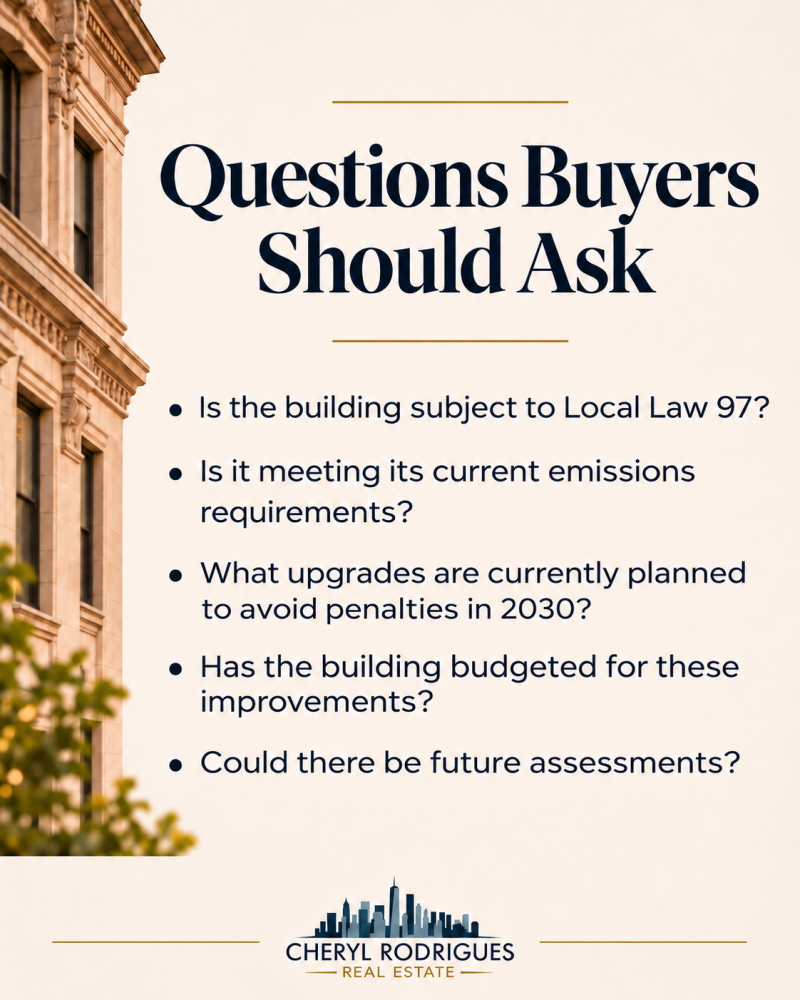
- Is the building subject to Local Law 97? Confirm whether the building is covered by the law and which compliance requirements apply.
- Is the building meeting its current emissions requirements? Find out whether the building is currently compliant and whether it has incurred or is anticipating any penalties.
- What upgrades are currently planned to avoid penalties in 2030? Ask whether the board or management has developed a plan to meet the stricter emissions limits.
- Has the building budgeted for these improvements? Understand how planned upgrades will be financed and whether adequate reserves have been set aside.
- Could there be future assessments? Find out whether owners may face additional assessments, higher maintenance, or increased common charges to cover the cost of compliance.
A well-managed building should not only understand its current obligations but also be planning for future requirements.
These are important questions to discuss with your real estate attorney when reviewing building financial statements, board minutes, and other due diligence documents.
How Can You Check Your Building?
New York City has made it easier for property owners and prospective buyers to research building energy performance.
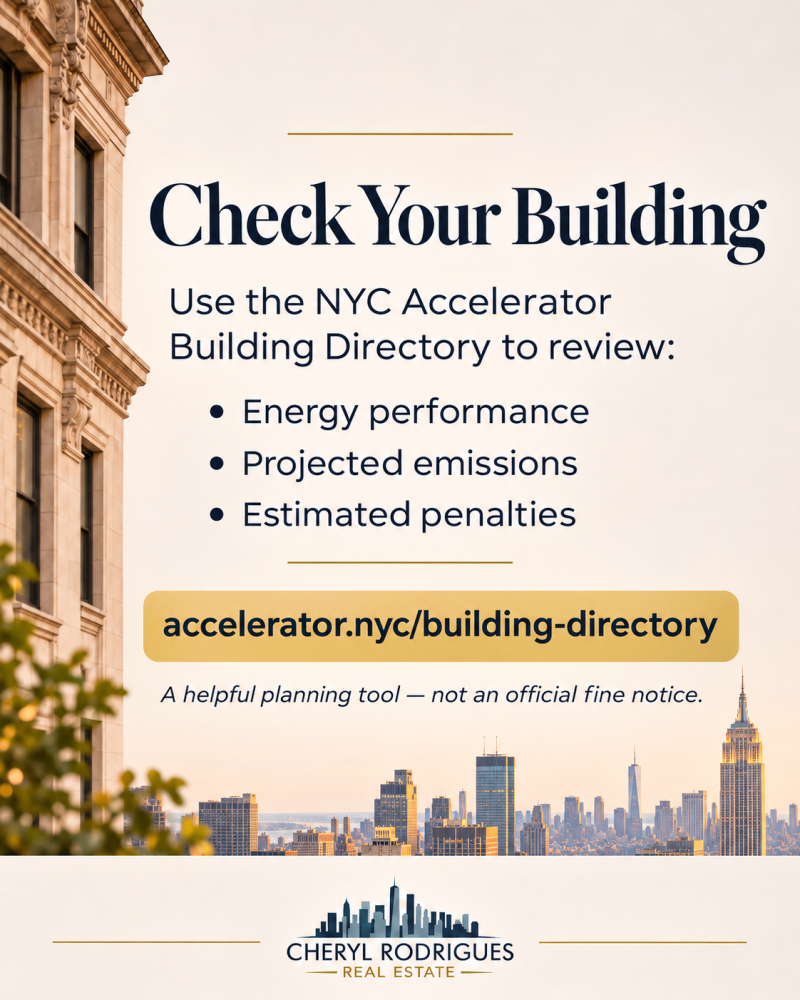
The NYC Accelerator Building Directory allows you to search for a property and review useful information, including:
- Whether the building appears to fall under Local Law 97.
- Its reported energy performance.
- Projected emissions compared with upcoming limits.
- Estimated potential penalties.
- Possible opportunities for energy improvements.
Check your building here: https://accelerator.nyc/building-directory
Simply enter your building’s address to begin. Keep in mind that the directory is a planning resource. Its estimates are not official determinations of compliance or actual fines. Building-specific information should be confirmed w Positive Side to Local Law 97
While much of the discussion focuses on potential penalties and costs, I also see an opportunity.
Buildings that invest wisely in energy efficiency may benefit from lower operating costs, more reliable systems, and improved long-term appeal to buyers.
A well-managed building that plans ahead and maintains healthy reserves may also be better positioned than one that delays necessary improvements.
As with any real estate investment, preparation and good management matter.

My Final Thoughts
Whether you are buying, selling, renting, or holding property for the long term, understanding the financial health of a building is just as important as understanding the market.
New York City real estate has always been a market of opportunities, but those opportunities look different depending on your circumstances.
My advice is simple: Don’t make decisions based solely on headlines. Understand your building, know your numbers, and take a long-term view.
If you have questions about how Local Law 97 could affect your apartment, your building’s marketability, or your next real estate decision, please feel free to reach out. I’m always happy to help.
Sources: NYC Department of Buildings and NYC Accelerator. Information current as of November 2026. Building-specific compliance, financial, and legal questions should be confirmed with the relevant qualified professionals.
Disclaimer: This newsletter is provided for informational purposes only and should not be construed as legal, tax, or financial advice. Property owners should consult their attorney, accountant, or tax advisor regarding their specific situation.
– Cheryl Rodrigues (cheryl.rodrigues@crrenyc.com)


Your Dream Home Awaits
I provide expert assistance for buying and selling, ensuring seamless transactions
by focusing on your unique needs and goals.